Before You Arrive: The Quiet Power of Thoughtful Preparation in Companionship
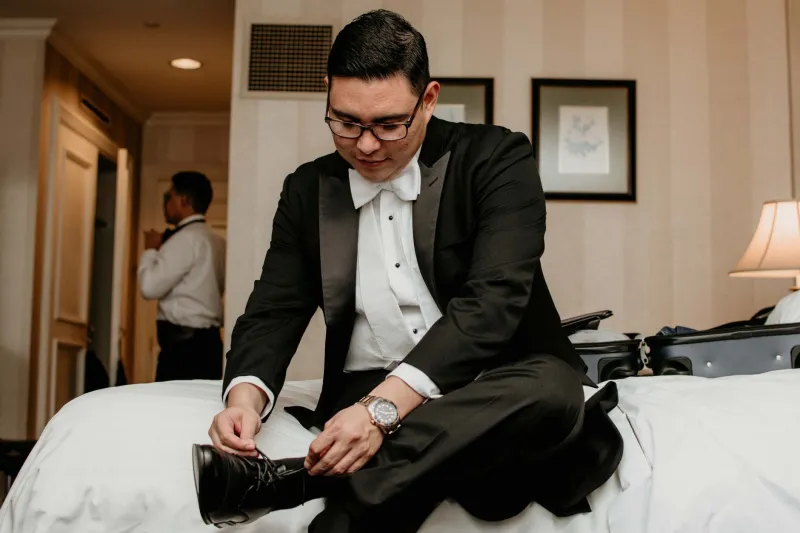
There is a particular kind of client who walks into an engagement already ahead. Not because of wealth or status, but because of something quieter — a willingness to think carefully before the moment arrives. The hours and days preceding a companionship engagement are not merely administrative. They are, for those who understand them correctly, an opportunity to lay the groundwork for something genuinely meaningful.
At Jasmine Companions, we have observed that the quality of an encounter is rarely determined solely by what happens in the room. More often, it is shaped by what a client chose to do — or not do — in the time leading up to it.
The Psychology Behind Preparation
Human beings are remarkably perceptive. We register effort, attentiveness, and intentionality even when those qualities are never explicitly named. When a client arrives having given genuine thought to the experience ahead — not merely the logistics, but the human dimension of it — that care communicates itself in ways that are difficult to articulate but impossible to miss.
Psychologists who study interpersonal connection often speak of "pre-interaction investment" — the degree to which we mentally and emotionally orient ourselves toward another person before we are in their presence. For companionship clients, this concept carries particular weight. A companion is a professional skilled in creating ease and warmth, but she cannot manufacture authentic connection from nothing. That connection requires a willing participant on both sides.
Preparation, at its most refined, is simply a form of respect — a signal that you regard this engagement as worthy of your genuine attention.
Sharing Context Without Oversharing
One of the most effective things a client can do in the days before an engagement is offer his companion a meaningful picture of who he is — not in exhaustive biographical detail, but in the textures that define his world at this particular moment.
Consider communicating, through the platform's established messaging channels, something about what you are carrying into the experience. Are you arriving after a demanding week? Are you celebrating something, however privately? Is there a particular kind of conversation you find yourself craving — substantive and intellectual, or light and unhurried? These are not logistical details. They are invitations.
A companion who knows that her client has had a grueling travel schedule can calibrate her energy accordingly — offering ease rather than stimulation, comfort rather than spectacle. A companion who learns that her client has a deep interest in architecture, jazz, or American political history has a genuine thread to pull, one that can animate the entire evening with real warmth.
The key is proportion. Share enough to open a door. Leave room for the encounter itself to fill in what remains.
Cultivating Curiosity About Your Companion
Preparation is not exclusively self-referential. The most sophisticated clients understand that genuine connection is bilateral — and they arrive with curiosity, not just information.
If your companion has a profile, read it with genuine attention rather than skimming for surface details. Note what she has chosen to emphasize. Consider what those choices might reveal about her sensibilities, her preferences, the kinds of interactions she finds most rewarding. Then allow those observations to inform the questions you might ask, the topics you might introduce, the tone you might bring.
This is not about performing interest. Performed curiosity is transparent and ultimately hollow. It is about allowing yourself to be genuinely interested — to arrive as a person who finds other people worth understanding. That quality, more than almost any other, distinguishes a client who leaves a lasting impression.
The Discipline of Clearing Mental Space
Perhaps the most undervalued aspect of preparation has nothing to do with communication at all. It is the internal work of arriving present.
Many clients come to a companionship engagement carrying the weight of their professional lives, their obligations, their unresolved tensions. This is entirely understandable — the demands of a busy American life do not pause politely at the door. But a client who arrives mentally elsewhere is, in a very real sense, not fully there. And a companion, however skilled, cannot connect with someone who is only partially in the room.
In the day or two before an engagement, consider what it might mean to deliberately set down some of what you are carrying. This might look like a long run, a quiet dinner alone, a deliberate hour without screens or notifications. It might mean journaling briefly about what you actually want from the experience — not what you think you should want, but what genuinely appeals to you in this moment of your life.
Arriving with mental clarity is a gift — to your companion and, perhaps more importantly, to yourself.
Setting an Intention, Not an Agenda
There is an important distinction between arriving with an intention and arriving with an agenda. An agenda is rigid; it imposes a structure on the experience and leaves little room for the unexpected moments that often become the most memorable. An intention, by contrast, is a direction — a general orientation toward what you hope to feel, experience, or share.
A client might arrive intending to feel genuinely at ease for the first time in weeks. Another might intend to have a conversation that reminds him why he finds the world interesting. Another might simply intend to be present with another human being without the pressure of performance or outcome.
These intentions, held lightly, create the conditions for authentic experience. They give the engagement a quiet shape without constraining it. And because they are rooted in genuine feeling rather than expectation, they tend to survive contact with reality — which agendas, notoriously, do not.
A Note on Timing and Communication
Practical preparation matters too, though perhaps not in the ways clients most commonly assume. Confirming arrangements with appropriate lead time, communicating any relevant changes promptly, and approaching correspondence with the same courtesy you would extend in any professional context — these are the foundations upon which everything else rests.
But timing carries a subtler dimension as well. A brief, thoughtful message sent a day before an engagement — not demanding, not presumptuous, simply warm and anticipatory — can shift the entire tone of what follows. It signals that you are looking forward to the experience. That you regard it as worth anticipating. These are small gestures, but in the world of companionship, small gestures accumulate into something significant.
Arrival as Culmination, Not Beginning
When a client has prepared thoughtfully — shared something genuine, cultivated real curiosity, cleared mental space, and set a quiet intention — arrival becomes not the beginning of the experience, but its culmination. The connection has already begun. The ease is already established. What unfolds in the room is simply the natural expression of what was built in the days before.
This is the quiet power of thoughtful preparation. It does not guarantee any particular outcome. But it creates the conditions in which something genuinely memorable becomes possible — and that, ultimately, is what every discerning client is seeking.